TL;DR Quick Fix:
1. Walk to locate the squeak and mark the spot.
2. Locate joists with a stud finder (or use wall clues).
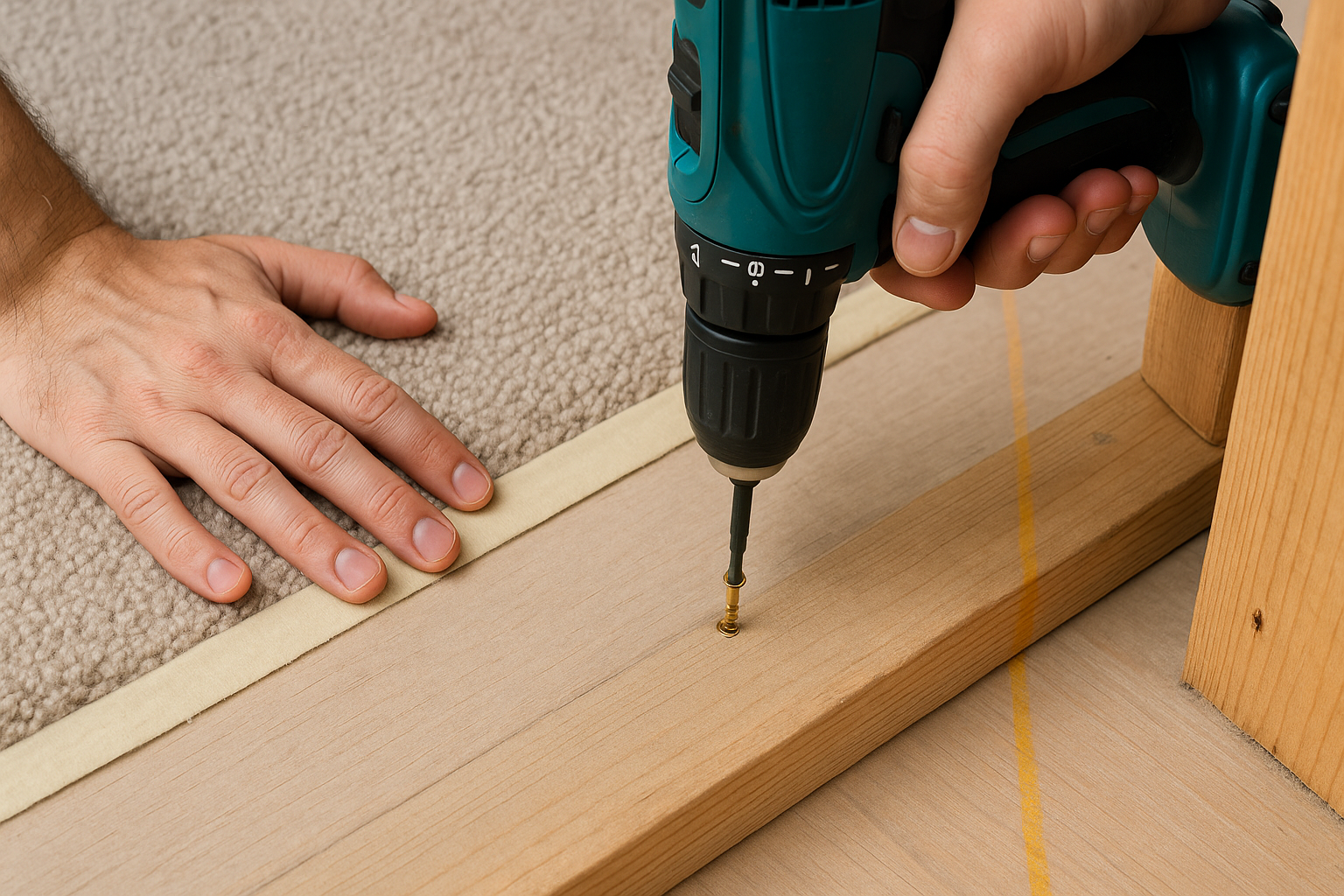
3. Drive countersnap screws through the carpet into the joist.
4. Snap screw heads off below the carpet surface and test again.
5. If you can access from below, shim and secure the subfloor to the joist.
A squeaky floor under carpet is more than annoying. It usually means the subfloor is moving slightly against the joists or fasteners. The good news: you can often silence the squeak without removing the carpet and without hiring a contractor.
Below are two reliable methods: one from above using breakaway screws, and one from below (basement or crawlspace) that can be even more permanent.
Why Floors Squeak Under Carpet
Floor squeaks happen when wood rubs against wood or metal. Under carpet, the noise is usually coming from movement between the subfloor and the joists.
- Loose fasteners: nails or screws backing out over time
- Gaps between subfloor and joist: shrinkage, settling, or slight sag
- Humidity changes: wood expands and contracts seasonally
Carpet does not cause the squeak. It just hides the problem until it gets loud enough to notice.
Method 1: Fix Squeaks Through the Carpet
This is the quickest option when you cannot (or do not want to) pull up carpet and padding. You will use special countersnap or breakaway screws designed to sink and snap off below the carpet backing so nothing is visible.
Tools and Materials
- Stud finder
- Drill/driver
- Countersnap or breakaway screws (commonly #8 x 2 to 2.5 inches)
- Painter’s tape (to mark joist lines)
- Measuring tape (optional but helpful)
Steps
- Locate the squeak: Walk slowly over the area. When you find the loudest point, place a piece of painter’s tape on the carpet to mark it.
- Find the joist: Use a stud finder to locate the floor joist beneath the carpet. Mark a short tape line that shows the joist direction.
- Drive the screw: Place the countersnap screw where the squeak happens (directly over the joist) and drive it through the carpet and pad into the joist. Stop when it feels snug. Do not over-tighten.
- Snap the head: Use the countersnap mechanism (or the kit tool) to snap the screw head off below the carpet surface.
- Test and repeat: Step on the area again. If it still squeaks, add a second screw about 1 to 2 inches away along the same joist line and test again.
Tips That Prevent Visible Damage
- Use only screws made for carpeted floors (breakaway/countersnap). Regular screws can snag fibers.
- If the carpet is thick, press down firmly to make sure the screw goes straight into the joist.
- Keep screws close to the squeak point. Random screws can miss the joist and do nothing.
Method 2: Fix Squeaks From Below the Floor
If you can access the underside of the floor (unfinished basement or crawlspace), this method is often the most durable because you are directly removing the movement between the joist and subfloor.
Steps
- Identify the squeaky area: Have someone walk above while you listen below. Mark the joist bay where the noise is coming from.
- Check the gap: If you see a small gap between the subfloor and joist, that movement is often the source of the squeak.
- Insert a shim: Tap a wood shim into the gap until snug. Do not force it. Over-shimming can lift the subfloor and create a new problem.
- Add adhesive (optional): If there is room, apply a small bead of construction adhesive to help eliminate future movement.
- Add screws: Drive 2-inch wood screws through the joist into the subfloor to tighten the connection. Space screws roughly every 6 to 8 inches in the squeaky area.
- Retest: Have your helper walk the spot again to confirm the squeak is gone.
If the squeak is caused by the subfloor rubbing on a nail, tightening from below often stops it immediately.
Safety and Maintenance Tips
- Check for wiring, plumbing, or HVAC lines before drilling or screwing.
- If your home has radiant heat, do not drill from above unless you are 100% sure where tubing is located.
- Do not over-tighten screws. Too much tension can create new squeaks.
- Keep indoor humidity stable when possible to reduce seasonal wood movement.
FAQs
Can I fix squeaks without removing carpet?
Yes. Countersnap (breakaway) screws are designed to go through carpet and snap off below the surface so the repair is hidden.
Will screws damage the carpet?
Not if you use screws made for carpeted floors. The hole is tiny and the snapped head sits below the backing so you cannot see it.
What if I can access the floor from below?
Shimming the gap and tightening the subfloor to the joist from below is often the longest-lasting repair.
What tools do professionals use?
Many use Counter-Snap or Squeak-No-More style kits that include breakaway screws and a guide tool for clean results through carpet.
Final Thoughts
Fixing a squeaky floor under carpet does not require tearing up the room. Start with countersnap screws if you need a fast fix from above. If you can access from below, shims and screws can lock everything down and prevent the squeak from coming back.
For more related DIY help, see our guides on carpet stretching and adhesive removal.